
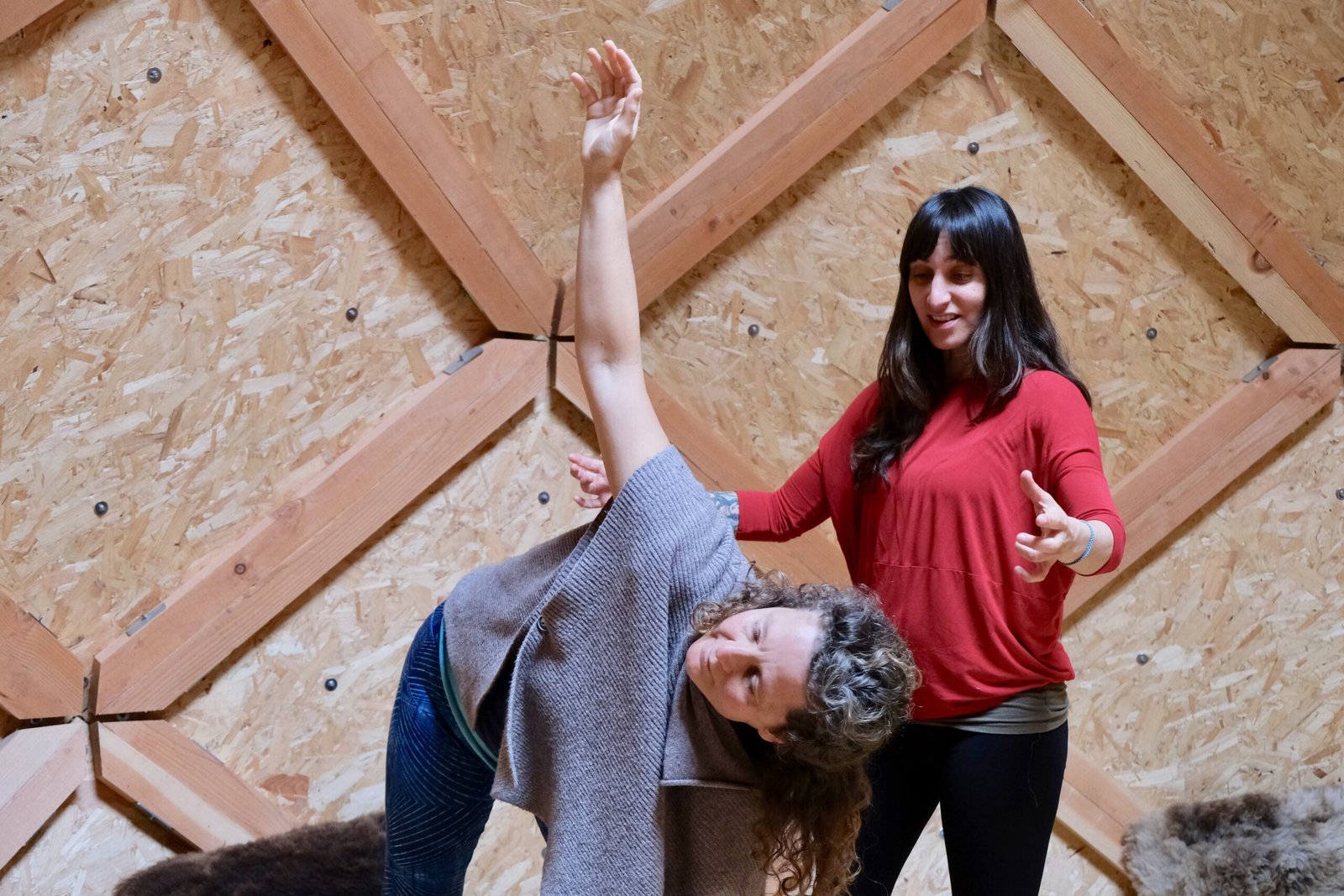
The Therapeutic Approach to Yoga and Pilates
Moving beyond exercise: learning to understand, sense and educate the body.
First, we need to be clear about why we choose to attend a Yoga or Pilates class.
Over my 20-plus years of teaching these two disciplines, the answers I hear have remained remarkably consistent: “I want to become more flexible,” or “My physiotherapist recommended Pilates to help me recover from an injury.”
The benefits of both practices are well known and researched. However, there are many different ways of teaching and experiencing them.
So, if both Yoga and Pilates offer physical and mental benefits, what distinguishes a therapeutic approach from a non-therapeutic one?
For me, the answer lies in the approach.
A non-therapeutic approach may primarily guide you towards a good physical workout, which can be beneficial in its own right. But if your intention is injury prevention, rehabilitation, or developing a deeper understanding of your body, body education becomes essential.
What do I mean by body education?
It means learning to understand and sense what is happening within your body as you move. It involves developing an awareness of your anatomy, the relationships between different body systems, the quality of your movement, and how your body responds to each exercise.
It is not simply about performing a movement correctly. It is about understanding and experiencing the movement from within.
In any somatic or embodied approach, it is crucial to involve both the moving and sensing body. Through this process, understanding becomes integrated across the whole mind-body system, rather than remaining an intellectual concept. This is what gives movement the potential to become a therapeutic and educational experience.
Beyond nervous system theory
Today, it is increasingly common in the worlds of Yoga and trauma-informed practice to hear teachers, therapists and practitioners referring to nervous system theory.
Although this knowledge can be informative and provide a useful starting point, understanding the nervous system intellectually is not the same as knowing how to work therapeutically with the body.
The nervous system is part of an extraordinarily complex, interconnected and creative system. Reducing therapeutic work to a collection of theories or simplified explanations can overlook the depth of what happens when we move, sense, feel and explore.
For me, embodiment is not simply about learning what the nervous system does. It is about creating the conditions in which we can experience, recognise and respond to our body’s intelligence.
The traditions and pioneers that inform my teaching
In my classes, I draw on the ancient wisdom traditions of Yoga and Mindfulness, particularly the Insight and Zen traditions, alongside the contemporary explorations of somatic pioneers whose work has profoundly influenced my understanding of the body.
These include:
- Bonnie Bainbridge Cohen and Body-Mind Centering®, which has deepened my understanding of the body through embodied anatomy, developmental movement and the relationship between movement and consciousness.
- Emilie Conrad and Continuum Movement, whose work explores movement, breath and the body’s fluid nature.
- Dr Peter Levine and Somatic Experiencing®, which has informed my understanding of trauma, nervous system responses and the importance of working with the body’s experience in the present moment.
I also want to acknowledge Vanda Scaravelli, whose approach revolutionised my understanding of Yoga.
Scaravelli developed what she deliberately chose not to call a method. Her approach invited the inner experience of feeling and touch to awaken the form of an asana from the inside out.
For me, this was profoundly somatic.
Her work gave central importance to the feminine and to the experience of the female body. It was invitational, poetic, imaginative and creative, while remaining deeply attentive to the natural intelligence of the body.
Through gravity, breath and the relationship with the floor, she explored how the spine could awaken without force.
Her approach offered a different perspective from some of the more dominant, directive Yoga traditions, which often emphasised prescribed forms and breathing techniques. It also encouraged me to question how practices developed around particular body types and anatomical experiences can be adapted to honour the diversity of women’s bodies.
My approach to Pilates
I have also adapted the traditional Pilates mat repertoire, originally developed by Joseph Pilates, to bring a greater emphasis on embodied movement and body education into my classes.
Rather than focusing exclusively on achieving a particular shape or repeating a prescribed sequence, I explore movement through the body’s five major diaphragms.
This offers another way to understand the relationships between different parts of the body, supporting movement, breath, stability and coordination as an integrated experience.
Bringing it all together
This is the approach I bring to the Yoga and Pilates classes I offer in my studio.
My intention is not simply to guide you through a series of exercises, but to invite you into a deeper relationship with your body.
To slow down, sense, explore and discover how movement happens from within.
Whether you come to improve mobility, support recovery from injury, develop strength, or prevent future injuries, I believe that learning to listen to your body is an essential part of the process.
Movement is not only something we do with our bodies. It is also a way of learning about, relating to and understanding ourselves.


